
The internet is no longer confined to browsers, platforms, and centralized servers. A profound shift is underway—one that promises to redefine how we connect, share, and own our digital experiences. Yet terms like decentralization and blockchain often obscure more than they clarify. This article cuts through the noise to examine what the web3 future internet actually means in practical terms. You’ll discover how emerging infrastructure aims to solve data silos, reduce censorship risks, and reshape online interaction for users and developers alike—grounded in real technological advancements, not speculation or hype.
The Shifting Foundation: From Centralized Servers to Decentralized Protocols
The modern internet—often called Web 2.0—runs on a client-server model. That means when you post a photo, send a message, or search a question, your data travels to a centralized server owned by a corporation. These companies act as intermediaries, storing, filtering, and monetizing information. Convenient? Absolutely. But it also means your access, privacy, and even identity depend on someone else’s infrastructure (and their terms of service updates).
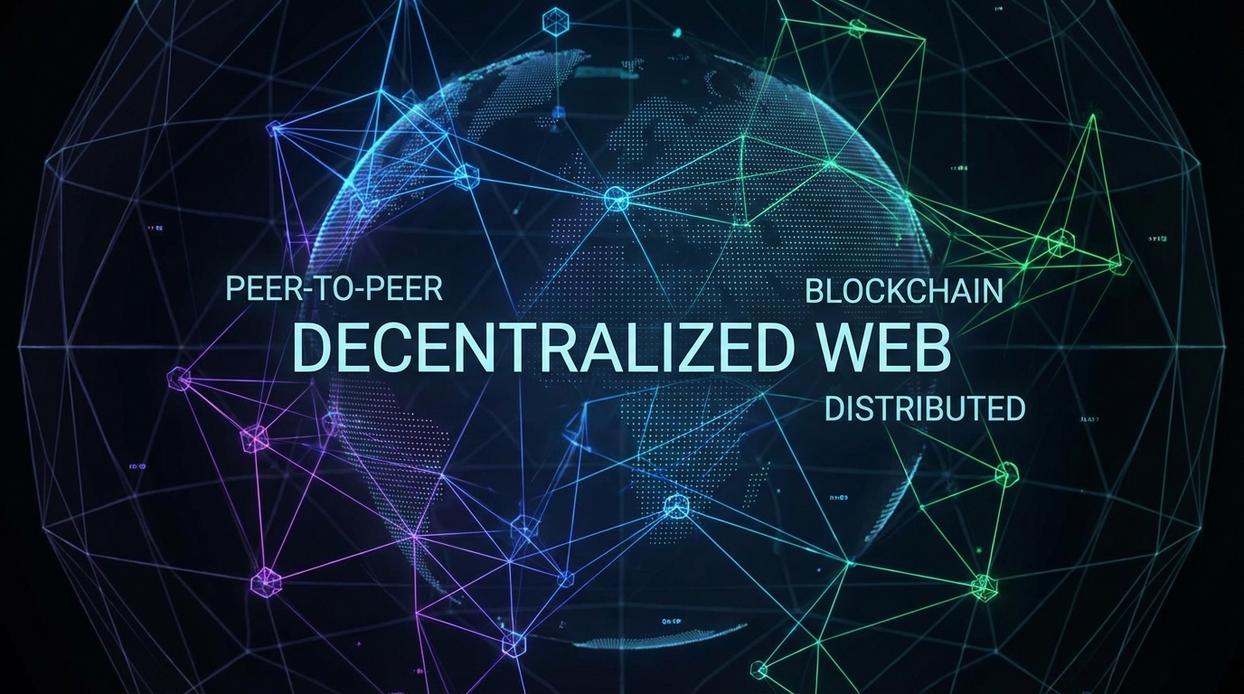
Web3 flips that script. Instead of platform-controlled hubs, it uses decentralized protocols—shared rules embedded in blockchain and distributed ledger technology. A protocol is simply a standardized way computers communicate. In this model, users connect peer-to-peer, without a single authority in the middle.
- Platform-centric: Facebook, Google — closed ecosystems
- Protocol-centric: Ethereum, IPFS — open, interoperable networks
Why does this matter to you? Resilience and control. Centralized servers create single points of failure—think massive outages or data breaches (Equifax, 2017). Distributed systems spread data across many nodes, reducing vulnerability and increasing transparency.
The result is a more durable, user-empowered foundation—the web3 future internet—where ownership isn’t borrowed; it’s built in.
Web3 in Practice: How Decentralization Will Reshape Communication
The internet has always evolved in waves. Now, the next shift is about control—specifically, who owns your data and voice online.
True Data Ownership and Self-Sovereign Identity
First, let’s define self-sovereign identity (SSI): a digital identity you control directly through a cryptographic wallet, rather than through Google, Meta, or another intermediary. In practice, this means your credentials, contacts, and content move with you across platforms. For example, instead of creating a new account for every app, you sign in with your wallet and selectively share verified data. As a result, corporate data harvesting becomes optional—not automatic.
Some critics argue most users prefer convenience over control. That’s fair. However, wallet-based logins are becoming simpler, and data breaches continue to expose centralized systems as fragile.
Censorship-Resistant Communication
Decentralized messaging and social platforms run on distributed networks, meaning no single authority can remove users or alter content unilaterally. While moderation still exists, it’s governed by transparent protocols or community rules. This reduces arbitrary de-platforming and increases resilience (think less “server outage panic”).
Creator Economy and Micropayments
Smart contracts—self-executing code on a blockchain—enable automatic, direct payments between users and creators. Instead of losing 30–50% to intermediaries, creators can receive funds instantly. Micropayments also make pay-per-article or pay-per-message models viable.
Verifiable Digital Scarcity
NFTs, or non-fungible tokens, represent unique digital assets. Beyond art, they function as access passes, memberships, or exclusive communication privileges. Consequently, communities can verify ownership without central databases.
Together, these systems point toward the web3 future internet—more portable, programmable, and user-controlled, much like the leap described in from mainframes to microchips key milestones in computing evolution.
AI and Machine Learning at the Protocol Layer
Artificial intelligence is becoming a CORE LAYER of decentralized infrastructure—not just an add-on. In the web3 future internet, AI agents can function as autonomous digital representatives. An AI agent is software that makes decisions on your behalf based on rules and data. Instead of sending your data back to a central server (the old Web2 model), these agents execute transactions, manage private keys, and personalize interfaces locally. Think of it like having a Jarvis for your wallet—minus the billionaire superhero budget.
AI also upgrades oracles, which are services that feed real-world data into blockchains. Traditional oracles simply relay prices or weather updates. AI-enhanced oracles interpret complex inputs—like insurance claims tied to satellite imagery—before triggering smart contracts. This makes agreements more RESPONSIVE and context-aware.
Machine learning strengthens infrastructure by:
- Predicting network congestion before slowdowns occur
- Optimizing data routing across decentralized nodes
- Detecting anomalous behavior to prevent exploits
For example, anomaly detection models similar to those used in fraud prevention (IBM Security, 2023) can flag unusual validator activity in real time. The benefit? Faster networks, smarter automation, and stronger protocol security without centralized oversight.
Optimizing for Tomorrow: Performance and Connectivity Hurdles
First, let’s tackle the scalability trilemma—the tension between security, decentralization, and speed. In simple terms, blockchains struggle to maximize all three at once (like trying to max out strength, stamina, and speed in a video game character). Critics argue you must sacrifice one for the others. However, Layer-2 rollups and sharding aim to split the workload without weakening the core chain. It’s less “pick two” and more “engineer smarter.”
Meanwhile, user experience remains a sticking point. Wallet keys, gas fees (transaction costs paid to validators), and clunky onboarding feel more “Mr. Robot” than mainstream. To move toward the web3 future internet, developers are focusing on:
- Social logins and smart wallets
- Gas abstraction
- Seamless cross-chain bridges
Finally, device and bandwidth limits pose real barriers. Light clients and optimized protocols reduce processing demands, making decentralized apps usable even on low-power devices or shaky connections.
Stepping Into the Web3 Era
The shift from a centralized web to a decentralized model isn’t just technical evolution—it’s a redefinition of how we connect, communicate, and exchange value online. If your goal was to understand what this transformation means, you now have a clearer view of both its promise and its complexity.
The real challenge isn’t vision—it’s execution. Moving beyond theory to scalable, user-friendly solutions is the hurdle that will determine how quickly the web3 future internet becomes part of everyday life.
Act now: start exploring decentralized applications, follow emerging protocols, and evaluate how this infrastructure can impact your digital strategy. Those who prepare today will lead tomorrow’s internet.
 There is a specific skill involved in explaining something clearly — one that is completely separate from actually knowing the subject. Kylor Vornhaven has both. They has spent years working with missed protocol vulnerabilities in a hands-on capacity, and an equal amount of time figuring out how to translate that experience into writing that people with different backgrounds can actually absorb and use.
Kylor tends to approach complex subjects — Missed Protocol Vulnerabilities, Tech Evolution Echoes, Expert Insights being good examples — by starting with what the reader already knows, then building outward from there rather than dropping them in the deep end. It sounds like a small thing. In practice it makes a significant difference in whether someone finishes the article or abandons it halfway through. They is also good at knowing when to stop — a surprisingly underrated skill. Some writers bury useful information under so many caveats and qualifications that the point disappears. Kylor knows where the point is and gets there without too many detours.
The practical effect of all this is that people who read Kylor's work tend to come away actually capable of doing something with it. Not just vaguely informed — actually capable. For a writer working in missed protocol vulnerabilities, that is probably the best possible outcome, and it's the standard Kylor holds they's own work to.
There is a specific skill involved in explaining something clearly — one that is completely separate from actually knowing the subject. Kylor Vornhaven has both. They has spent years working with missed protocol vulnerabilities in a hands-on capacity, and an equal amount of time figuring out how to translate that experience into writing that people with different backgrounds can actually absorb and use.
Kylor tends to approach complex subjects — Missed Protocol Vulnerabilities, Tech Evolution Echoes, Expert Insights being good examples — by starting with what the reader already knows, then building outward from there rather than dropping them in the deep end. It sounds like a small thing. In practice it makes a significant difference in whether someone finishes the article or abandons it halfway through. They is also good at knowing when to stop — a surprisingly underrated skill. Some writers bury useful information under so many caveats and qualifications that the point disappears. Kylor knows where the point is and gets there without too many detours.
The practical effect of all this is that people who read Kylor's work tend to come away actually capable of doing something with it. Not just vaguely informed — actually capable. For a writer working in missed protocol vulnerabilities, that is probably the best possible outcome, and it's the standard Kylor holds they's own work to.