Technology is evolving at a pace that makes yesterday’s breakthroughs feel outdated almost overnight. If you’re searching for clarity on where computing is headed—and what that means for AI tools, machine learning trends, protocol vulnerabilities, and device performance—you’re in the right place. This article unpacks the most important computing evolution milestones shaping today’s digital landscape and explains how they directly impact the systems and tools you rely on.
From early automation frameworks to advanced neural architectures and edge optimization strategies, we focus on what truly matters: practical insights you can apply. Rather than chasing hype, we analyze real-world developments, emerging risks, and performance innovations backed by technical research and hands-on evaluation of modern platforms.
By the end, you’ll understand not just how computing is changing—but how to navigate those changes strategically, securely, and efficiently.
Once, computers filled rooms; today, they nap in our pockets like obedient digital genies. That breathtaking shrink from warehouse to wrist shows how FAST innovation moves. To grasp AI or protocol flaws, you need the backstory—the computing evolution milestones that act like tree rings in silicon.
Consider this quick timeline:
- Abacus and mechanical gears: the counting beads of antiquity.
- Room-sized mainframes: industrial brains humming like factory engines.
- Personal computers and smartphones: bicycles to race cars in a single lifetime.
- Early AI systems: seedlings of today’s thinking machines.
History isn’t nostalgia; it’s the operating system beneath everything.
The Mechanical Dreamers: Blueprints of the Digital Age
In smog-laced Victorian London, long before Silicon Roundabout startups, Charles Babbage sketched machines that foreshadowed modern CPUs. His Difference Engine was built to compute polynomial tables automatically—think of it as a 19th-century spreadsheet, powered by brass gears instead of silicon. More ambitious was the Analytical Engine, designed with features eerily familiar to today’s engineers:
- A “store” (memory)
- A “mill” (processor)
- Punch cards for input (borrowed from Jacquard looms)
This wasn’t just arithmetic—it was architecture. A programmable, general-purpose machine in theory (yes, theory doing the heavy lifting).
Ada Lovelace grasped what others missed. She wrote the first algorithm intended for implementation and argued the machine could manipulate symbols, not just numbers—anticipating computing evolution milestones by a century. Critics note neither machine fully worked. True. But like a prototype PCB etched in a garage lab, their real power was conceptual—the blueprint future engineers would compile into reality.
The Electronic Leap: Vacuum Tubes and the First Computations
As we explore the journey from bulky mainframes to sleek microchips, it’s fascinating to consider how innovations like those highlighted in Etrstech Technology Updates From Etherions continue to shape the future of computing.
In 1936, long before laptops or cloud servers, Alan Turing proposed the Turing Machine—an abstract model of computation that imagined a device manipulating symbols on an infinite tape according to a set of rules. In simple terms, it defined what a computer could and could not calculate. Although purely theoretical, it set the boundaries for modern computing (think of it as the blueprint before the building existed). Could a machine truly “think,” or was it just following instructions?
A few years later, World War II accelerated theory into reality. By 1943, Britain’s Colossus was operational, using thousands of vacuum tubes—electronic components that control electric current—to break encrypted German messages. This wasn’t a lab experiment; it was proof that large-scale electronic computation worked under pressure. After months of relentless testing, these machines shortened the war by aiding Allied intelligence (according to the UK National Archives).
Then, in 1945, ENIAC emerged in the United States. Filling a massive room and powered by roughly 18,000 vacuum tubes, it performed calculations in seconds that once took days. As one of the major computing evolution milestones, ENIAC fueled post-war scientific research and reshaped what machines could achieve.
The Miniaturization Revolution: Transistors and Integrated Circuits
The Transistor Replaces the Tube
In 1947, inside Bell Labs, John Bardeen and Walter Brattain demonstrated the first working transistor. William Shockley soon refined it. “This thing will replace the vacuum tube,” Shockley reportedly insisted—and he was right. A transistor is a semiconductor device that amplifies or switches electronic signals. Compared to bulky vacuum tubes (glass devices that controlled electric current through a vacuum), transistors were smaller, consumed far less power, and failed less often. Computers that once filled rooms could now shrink (and stop overheating like a 1950s sci‑fi robot short‑circuiting mid‑scene).
Smaller size, lower power use, higher reliability—that trio changed everything.
The Integrated Circuit (IC)
By 1958–1959, Jack Kilby at Texas Instruments and Robert Noyce at Fairchild Semiconductor independently placed multiple transistors onto a single silicon chip, creating the integrated circuit (IC)—a compact assembly of interconnected components etched into one material. “The real solution was to make it all in one piece,” Noyce explained. This breakthrough marked one of the defining computing evolution milestones, enabling complex systems to fit inside calculators, then personal computers, then smartphones.
Moore’s Law
In 1965, Gordon Moore observed that transistor counts on chips doubled roughly every two years (Moore, 1965). This prediction—Moore’s Law—captured the exponential growth of computing power for decades, powering everything from PCs to how the internet of things redefined everyday technology.
Democratizing Power: The PC and the World Wide Web
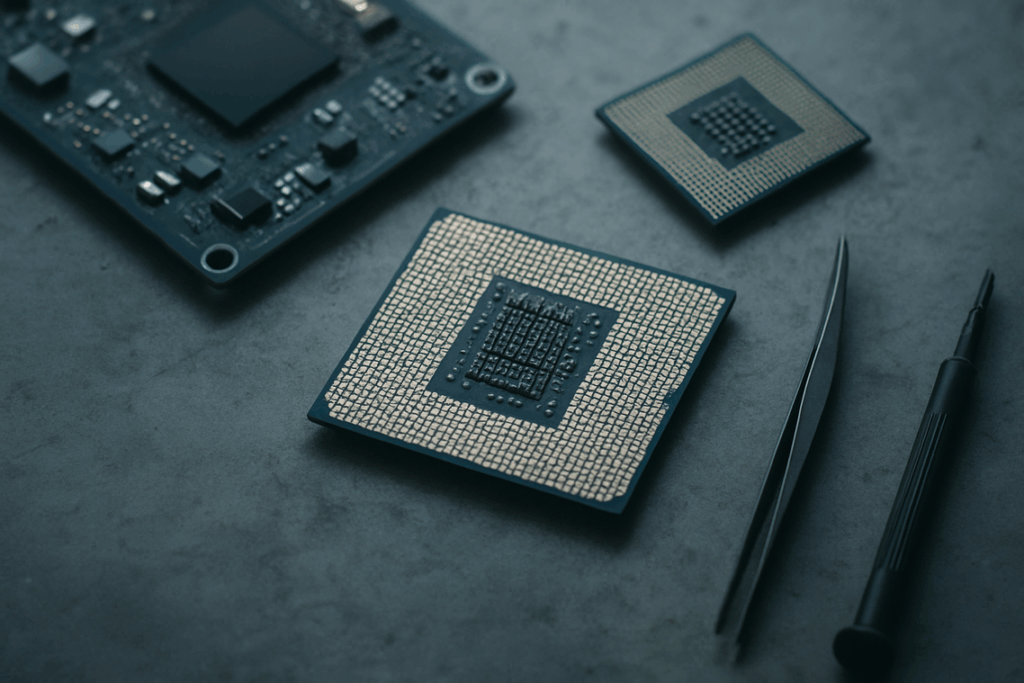
The story of modern computing starts with a radical idea: shrink the brain of a computer onto a single chip. In 1971, Intel introduced the 4004 microprocessor—the first commercially available CPU on one chip. A microprocessor is the central processing unit (CPU) miniaturized into a compact integrated circuit. Before this breakthrough, computers filled rooms and required teams to operate (think NASA control room vibes). After it, building smaller, affordable machines became possible.
From there, the Personal Computer (PC) era took off. Systems like the Apple II (1977) and the IBM PC (1981) moved computing power into homes and small businesses. Instead of submitting punch cards to a mainframe, individuals could write documents, manage finances, or even play early games directly on their desks. This shift marked one of the most important computing evolution milestones in history.
However, hardware alone wasn’t enough. Operating systems such as MS-DOS—and later Windows—acted as the software layer, meaning the interface between users and hardware. A graphical user interface (GUI) replaced typed commands with windows, icons, and menus, making computers usable for non-programmers. (If you’ve ever dragged a file into a folder, thank the GUI.)
Meanwhile, networking evolved from ARPANET, a U.S. Department of Defense project (1969), into something broader. In 1989, Tim Berners-Lee proposed the World Wide Web, introducing hypertext, which links documents together. The Web transformed the internet into a user-friendly information system—essentially turning global data into something you could browse as easily as flipping TV channels.
Understanding these shifts helps explain how today’s connected world became possible.
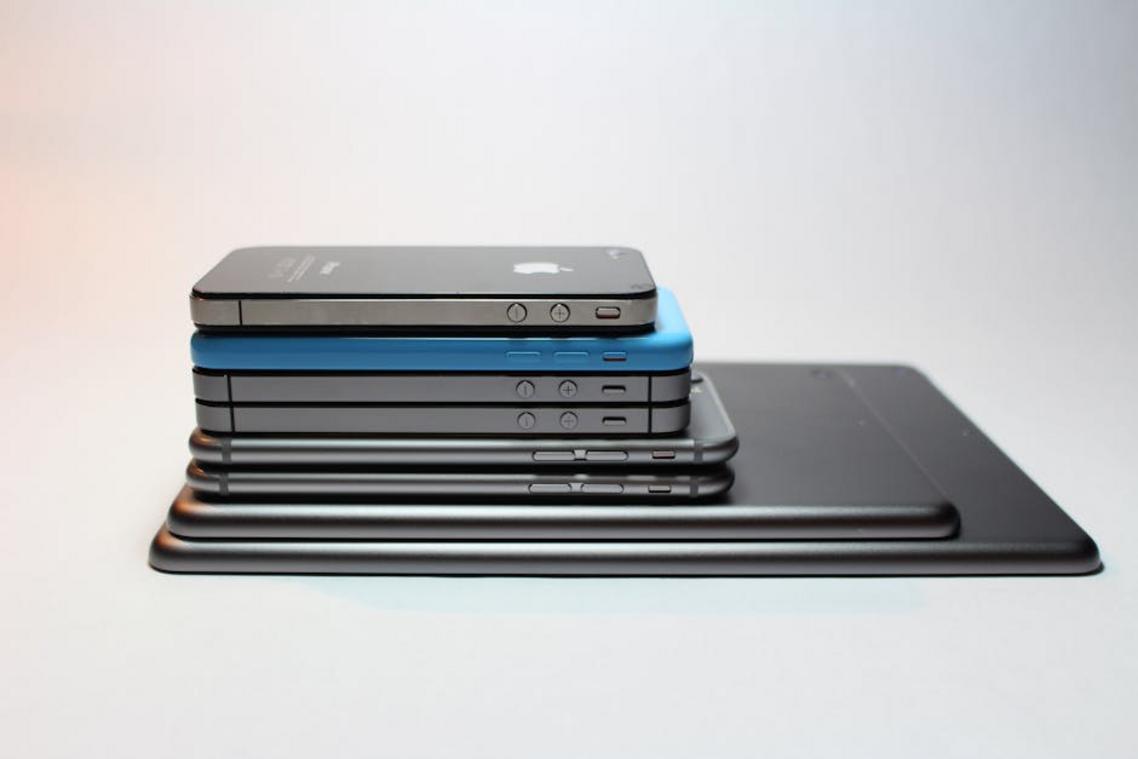
I still remember the first time my phone streamed a full movie on a train—no cables, no waiting. That moment made the Mobile and Cloud Shift real for me. Smartphones untethered computing; cloud computing centralized storage and processing, turning apps into portals rather than products. Meanwhile, the Rise of AI and Machine Learning feels like the next leap, powered by massive datasets and scalable GPUs (the quiet heroes of modern tech). These computing evolution milestones now enable smarter device optimization and expose new protocol vulnerabilities. Looking ahead, ubiquitous systems will feel invisible—like Wi‑Fi today—yet demand sharper oversight and resilience.
The Next Move in Your Tech Evolution Journey
You came here to understand how today’s innovations connect to the broader arc of computing evolution milestones—and now you can clearly see how AI tools, machine learning trends, protocol vulnerabilities, and device optimization all fit into that progression.
The reality is this: technology is advancing faster than most teams can adapt. Falling behind doesn’t just slow growth—it exposes you to inefficiencies, security risks, and missed competitive opportunities. That’s the pain point modern builders, developers, and tech-driven businesses face every day.
The good news? You now have the clarity to act strategically instead of reactively.
Start by auditing your current systems, identifying weak protocol points, and integrating smarter AI-driven optimization tools. Stay proactive about emerging machine learning applications before they become industry standards.
If staying competitive in a rapidly shifting tech landscape feels overwhelming, don’t wait. Get expert-backed insights, practical breakdowns, and forward-focused analysis trusted by thousands of tech readers. Explore the latest resources now and future-proof your systems before the next shift leaves you behind.