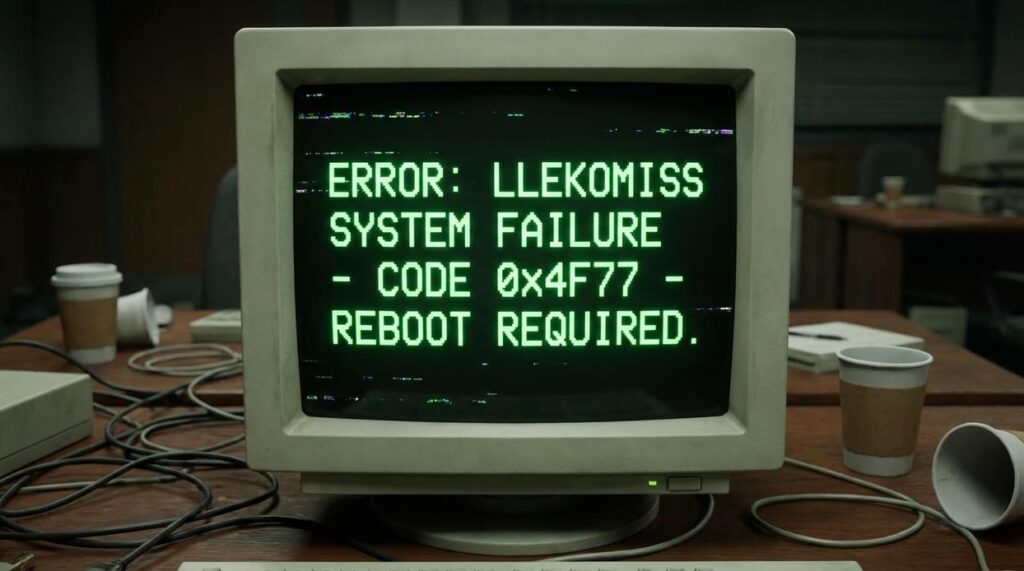
I’ve spent years tracking down missing components in systems that should have worked perfectly.
You know the feeling. Everything looks right. The code compiles. The hardware connects. Then you hit run and get slapped with an error about something that’s supposedly missing.
Here’s the thing: a missing component isn’t just annoying. It can crash your entire system or leave security holes you won’t find until it’s too late.
Most troubleshooting guides tell you to reinstall everything and hope for the best. That’s not a solution.
I’m going to show you how to actually diagnose what’s missing. Not guess. Not try twenty different fixes. Actually find the specific piece that’s causing the problem.
This framework works across software, hardware, and AI systems. I’ve used it to solve llekomiss errors that stumped entire teams.
We’re not doing surface level fixes here. You’ll learn how to identify the root cause, understand why that component matters, and fix it so it doesn’t break again next week.
No trial and error. No reinstalling your entire stack.
Just a clear method for finding what’s missing and putting it back where it belongs.
The Anatomy of a ‘Missing Component’: More Than Just a File
Most troubleshooting guides treat missing components like they’re all the same problem.
They’re not.
I’ve seen developers waste hours chasing the wrong fix because they misidentified what was actually missing. You can’t solve a firmware issue with a package manager command (though I’ve watched people try).
Let me break down what you’re really dealing with.
Software Dependencies
This is where most of you will spend your time.
Missing libraries are the usual suspects. Your .dll files on Windows or .so files on Linux decide to vanish or never existed in the first place. The application throws an error and you’re left hunting through documentation that assumes you already know what you’re doing.
Then you’ve got outdated packages. Your npm install worked fine last month but now half your dependencies are throwing version conflicts. Pip can’t resolve your Python requirements. Maven decides that two of your Java libraries hate each other.
API endpoints fail too. The service you’re calling moved their endpoint or deprecated it entirely without telling you (because who reads changelogs, right?).
Hardware and Firmware
Here’s where it gets physical.
Supply chain issues mean the microcontroller you spec’d six months ago doesn’t exist anymore. I saw this happen repeatedly in 2021 and it’s still a problem. You can’t just swap in a different chip and hope your code works.
Incompatible peripherals are sneakier. The device connects but your system doesn’t recognize it because the firmware driver is missing or corrupted. Your hardware sits there doing nothing while you dig through manufacturer websites looking for drivers that may or may not exist for your OS version.
Some devices won’t even initialize without the right firmware. No error message. Just silence.
AI & Machine Learning Models
This is where missing components get weird.
Your training dataset could be incomplete. Maybe you’re missing entire feature columns or your data got corrupted during transfer. The model trains anyway but your predictions are garbage and you don’t know why until you audit the source data.
Pre-trained models disappear from repositories. The research team took down their weights or the hosting service went offline. Now your transfer learning pipeline is broken and you need to either find an alternative or train from scratch (which you probably don’t have the compute budget for).
Missing feature vectors are particularly annoying. Your model expects 47 input features but you’re only providing 46. Sometimes you get an error. Sometimes the model just fills in zeros and gives you nonsense output. This connects directly to what I discuss in Llekomiss Run Code.
At llekomiss, I track these patterns because they repeat across different tech stacks. The root cause changes but the symptoms look familiar once you know what to watch for.
You need to identify which type of missing component you’re facing before you start fixing anything.
Otherwise you’re just guessing.
The Ripple Effect: How One Missing Piece Compromises the Entire System
You know that scene in Jurassic Park where Dennis Nedry shuts down the security systems?
One missing piece. Total chaos.
That’s what happens when your system is missing a dependency. Except there’s no Jeff Goldblum to tell you life finds a way.
When Systems Start to Crumble
A missing component doesn’t just break one thing. It breaks everything connected to it.
I’ve seen systems develop memory leaks because a garbage collection library wasn’t loaded. The application keeps running but slowly eats up RAM until the whole thing crashes. Sometimes it takes hours. Sometimes days.
Segmentation faults are worse. Your program tries to access memory it doesn’t have permission to touch and the OS kills it instantly. No warning. No graceful shutdown.
And if you’re running Llekomiss Run Code in production? A complete crash can take down services that depend on it.
The Security Nightmare
Here’s what keeps me up at night.
Attackers don’t need sophisticated zero-day exploits when you’re missing basic components. A disabled authentication module means they walk right in. An outdated library with known vulnerabilities becomes their favorite entry point.
I watched a company get breached because they were missing a security patch for a logging library. The attackers knew exactly which version was vulnerable and exploited it within hours of scanning the system.
The llekomiss error you see in your logs? That might be telling you something’s already wrong.
Silent Killers
Performance degradation is sneaky. Your system detects a missing component and falls back to a slower code path. Everything still works but runs at half speed.
Users complain. You check CPU and memory. Everything looks fine.
What you don’t see is the system processing data with incomplete information. Writing corrupted records to your database. By the time you notice, you’ve got weeks of bad data and no clean way to fix it.
That’s the real danger. Not the loud crashes but the quiet failures that compound over time.
A Universal Diagnostic Framework: From Error to Resolution

Most troubleshooting guides tell you to “check the logs” and call it a day.
That’s not helpful.
I’ve debugged enough systems to know that finding the actual problem requires a process. Not guesswork. Not random Google searches hoping someone else hit the same wall.
A real framework.
Some people argue that every error is unique and you can’t apply the same steps every time. They say troubleshooting is an art that comes with experience.
Sure, experience helps. But waiting years to build intuition when you need to fix something today? That’s not practical.
Here’s what actually works.
Step 1: Interrogate the Error Log
Don’t just read the error message. That’s surface level.
You need the call stack. You need process IDs. You need timestamps that show you the exact moment everything fell apart.
In Python logs, look for the traceback. It shows you the chain of function calls that led to failure. In system logs like /var/log/syslog, timestamps tell you if multiple services crashed at once (which points to a different root cause than a single process dying).
For Windows Event Viewer, the Event ID matters more than the description. Event ID 1000 means application crash. Event ID 7034 means a service terminated unexpectedly.
Step 2: Map Your Dependencies
You can’t fix what you can’t see.
Run ldd on Linux to see what libraries your binary actually loads. Not what you think it loads. What it actually pulls in at runtime.
For Python, I use pipdeptree to visualize the whole dependency chain. You’d be surprised how often a package three levels deep causes the Llekomiss Python Fix you’re hunting for.
Hardware? Check your bill of materials. Make sure every component version matches what your system expects.
Step 3: Isolate the Environment
This is where most people skip ahead and regret it later.
Spin up a Docker container with just your application and its direct dependencies. Nothing else. If it works there but fails on your host system, you know the problem isn’t your code.
It’s something in your environment. Could be a conflicting service. Could be a firewall rule. Could be file permissions.
But now you know where to look.
Step 4: Audit Versioning and Compatibility
The right component at the wrong version is still wrong.
Check your library versions against what your application expects. Run pip list and compare it to your requirements.txt. For system libraries, use dpkg -l on Debian or rpm -qa on Red Hat.
API versions matter too. If you’re calling an external service, verify the API version in your request headers matches what the endpoint expects.
Driver mismatches between your kernel and hardware? That’ll crash your system in ways that look completely unrelated to the actual cause.
The pattern here is simple. Work systematically. Document what you check. Don’t skip steps because you think you know the answer.
Preventative Engineering: Building Resilient Systems
You can’t fix what keeps breaking.
I mean you can. But at some point you need to ask why it keeps happening in the first place.
Most teams I talk to spend 80% of their time putting out fires. They patch systems, update dependencies, and scramble when models suddenly perform worse than they did last month.
Here’s what I do instead.
Build systems that don’t break to begin with.
For software, I use Infrastructure as Code. Every server, every configuration, every deployment gets defined in version-controlled files. When something goes wrong (and it will), I know exactly what changed.
Lock files are non-negotiable. Your package-lock.json or poetry.lock files ensure that your builds work the same way every single time. No surprises when a dependency updates and breaks everything.
Hardware is trickier. You can’t just roll back a physical component. That’s why I design for redundancy from day one. If a chip becomes unavailable, I want a second source already spec’d and tested.
Supply chains fail. We saw this during the pandemic when lead times hit 52 weeks for basic components. The teams that survived? They had alternatives ready.
For AI and ML work, version everything. Your data, your models, your training code. Tools like DVC let you tie a model’s performance to the exact dataset and code that created it.
When a model starts giving weird results, you need to know if the data changed or if the code did. Without versioning, you’re just guessing.
I’ve seen what happens when teams skip these steps. They end up in llekomiss does not work territory, frantically trying to reproduce results they got three months ago.
Prevention beats reaction every time.
Turning Frustration into a Fixable Problem
You now have a framework that works.
The next time you see a “missing component” error, you won’t panic. You’ll know exactly where to start looking.
I’ve walked through this process hundreds of times. Code that won’t compile. Circuit boards that refuse to power on. AI models that throw cryptic errors about dependencies.
The pattern is always the same. Random searching wastes hours and gets you nowhere.
This framework changes that. It forces you to isolate the problem step by step. You move from a vague error message to a specific root cause you can actually fix.
No more guessing. No more reinstalling everything and hoping it works.
The panic and wasted time you’ve experienced before? That’s over once you commit to this systematic approach.
Here’s what you do next: Bookmark this framework. The next time you hit a missing component error, start with Step 1. Work through each diagnostic step with confidence.
You came here frustrated and stuck. Now you have a process that actually works.
Stop guessing and start diagnosing. Your next error is just a problem waiting to be solved.